
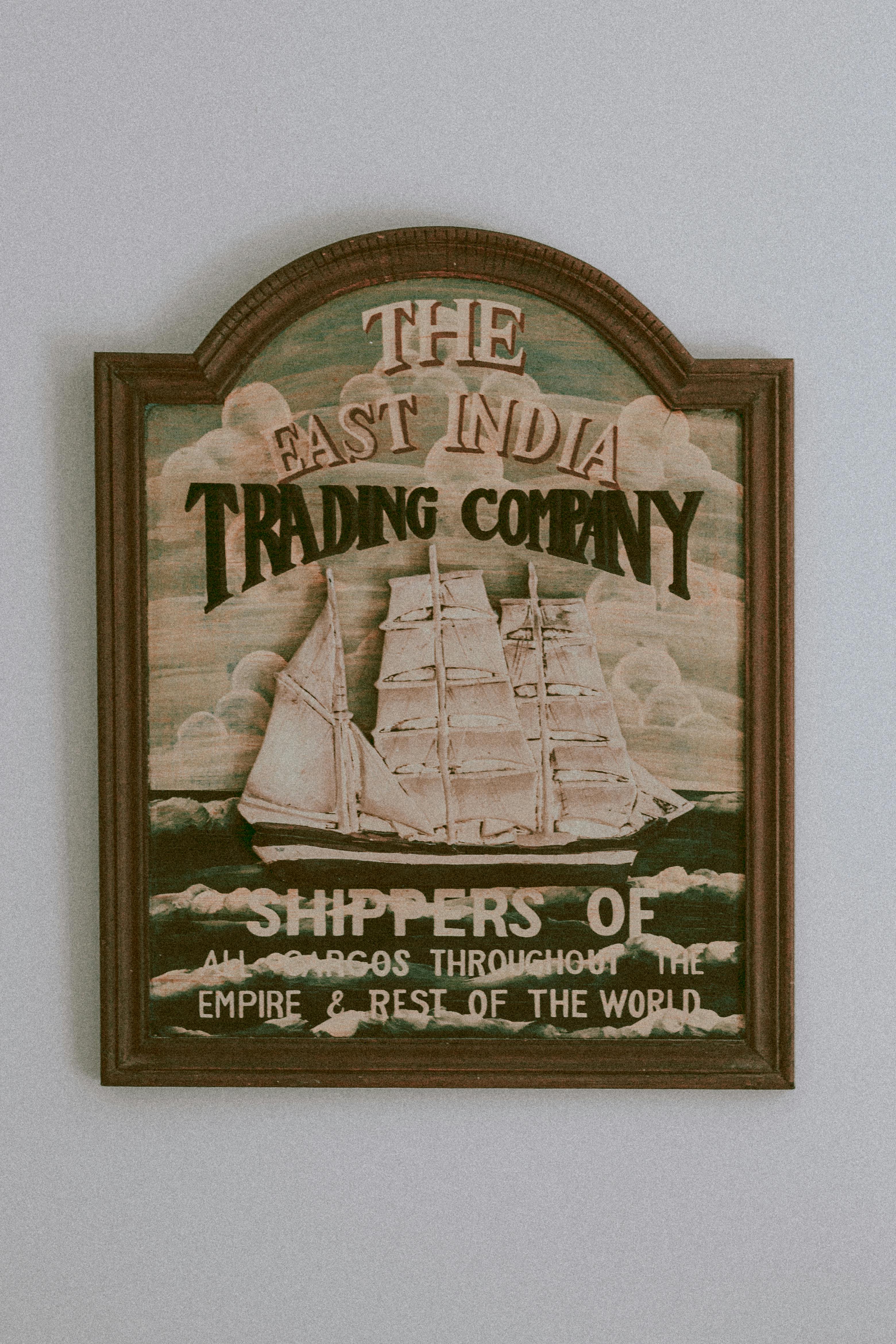
A Brief History of the Original East India Company
The original East India Company, officially known as the English East India Company, was founded on December 31, 1600, through a royal charter granted by Elizabeth I. Established as a joint-stock company, it allowed investors to purchase shares and share both the profits and risks of overseas trade—making it one of the world’s earliest multinational corporations.
Early Trade and Expansion in India
Initially created to compete in the lucrative spice trade of the East Indies, including India and Southeast Asia, the company quickly expanded its commercial ambitions. In 1612–1613, it established its first trading post in Surat, India, marking the beginning of a long and influential presence in the Indian subcontinent.
The British Crown later granted the company monopoly rights over English trade east of the Cape of Good Hope, strengthening its dominance in global commerce. Over time, the East India Company developed an extensive network of trading posts (known as “factories”) across India.
From Trading Company to Colonial Power
By the 18th century, the East India Company had transformed from a commercial enterprise into a powerful political and military force. It built fortified settlements, formed strategic alliances with local rulers, and engaged in military conflicts with European rivals such as France, as well as various Indian kingdoms.
A turning point came after the Battle of Plassey in 1757, when the company defeated the Nawab of Bengal. This victory enabled it to gain control over Bengal, one of the wealthiest regions in India. Following this, the company began collecting taxes, administering justice, and governing large territories—effectively acting as a sovereign power.
Legacy of the East India Company
The East India Company played a central role in shaping British colonial rule in India and laid the foundations for the British Empire in South Asia. Its evolution from a trading corporation to a governing authority remains one of the most significant developments in global economic and imperial history.
East India Company Brand Shuts Down: Mayfair Store Closed, Firms Face Liquidation
The modern revival of the East India Company has reportedly come to an end, with the company ceasing operations after years of financial difficulties.
According to recent reports, the company’s official website is no longer operational. Its flagship 2,000-square-foot luxury store at 97 New Bond Street in Mayfair, London, is now vacant and listed for rent, signaling the closure of its high-profile retail presence in one of the UK’s most prestigious shopping districts.
East India Company Collections Ltd. Faces Winding-Up Petition
A related entity, East India Company Collections Ltd., is also facing a winding-up petition from creditors. Additionally, several other businesses connected to entrepreneur Sanjiv Mehta and operating under the “East India” name have reportedly been dissolved, further indicating the collapse of the modern brand structure.
Sanjiv Mehta’s 2010 Acquisition Drew Global Attention
When Sanjiv Mehta acquired the rights to the historic East India Company name in 2010, the move generated significant international headlines. Many observers viewed it as a symbolic reversal of colonial history — an Indian businessman taking control of a brand associated with a company that once ruled vast parts of India during British colonial rule.
Media outlets described the acquisition as a powerful shift in historical narrative, reflecting changing global economic dynamics.
Luxury Retail Vision in Mayfair
Following the acquisition, Mehta launched a luxury retail concept in London’s Mayfair district, positioning the brand alongside iconic British retailers such as Fortnum & Mason. The store offered premium teas, single-origin chocolates, exotic spices, fine confectionery, and other high-end gourmet products, aiming to redefine the East India Company as a heritage luxury brand.
In a 2017 interview with The Guardian, Mehta described his vision for transforming the historic name into a modern symbol of positivity. He stated:
“An Indian owning the East India Company shows how something negative has been turned into something positive. The historic company was built on aggression, but the present one stands for compassion.”
Financial Struggles and Business Closure
Despite the strong symbolism, brand recognition, and early media interest, the modern East India Company was unable to maintain long-term financial sustainability. Mounting financial pressures ultimately led to the shutdown of operations, the closure of its Mayfair flagship store, and the winding up of associated companies.
The development marks the end of a high-profile attempt to reinvent one of history’s most controversial corporate names into a contemporary luxury brand.



0 Comments